Snow Resources · October 12, 2026 · Snowplow.tv editorial team
First Frost: Mark New Concrete Before the Plow Arrives
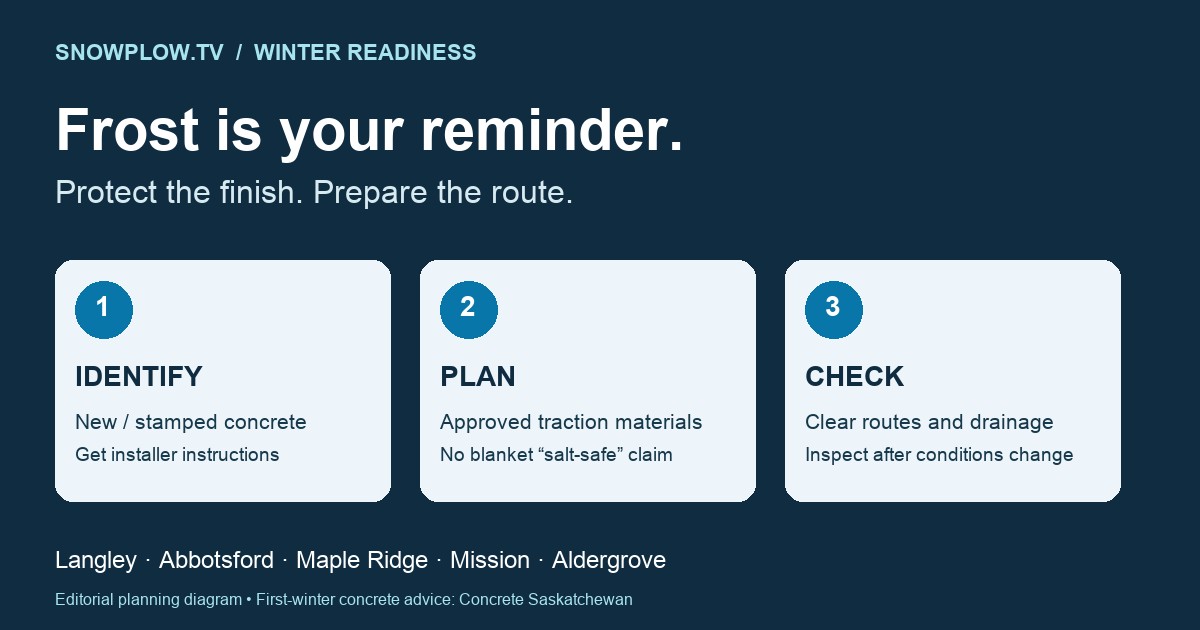
Turn the frost reminder into a site walk
Before the first plowing visit, walk the property while its curbs, finishes and drainage are visible. Properties in Langley, Abbotsford, Maple Ridge, Mission and Aldergrove can use this preparation window to settle the route and protect recent construction. Snowfall can hide the very features a crew needs to avoid. A frost reminder is a reason to prepare now; it is not a forecast or confirmation of a regional weather event.
Map the surfaces, not just the parking spaces
Give the provider a labelled site plan distinguishing asphalt, mature concrete, new slabs, stamped entrances and pavers. Record concrete pour dates and any sealer or installer restrictions. Mark the transition from a driving lane to a pedestrian entrance. A single broad instruction to clear the property leaves too much ambiguity about sensitive finishes, equipment access and hand work.
Agree on equipment access before dispatch
Ask the contractor to review which areas suit its equipment and which need a different method. Discuss blade contact, clearance and the treatment of decorative edges with the provider and surface installer. Do not assume one blade setting or scraping method is appropriate everywhere. Record existing chips, uneven joints, drain covers, utility lids and low fixtures with dated photographs. Confirm who installs and maintains any agreed markers.
Keep new concrete out of routine salt instructions
The plow route and the ice-treatment route are different instructions. Concrete Saskatchewan recommends avoiding deicers on new concrete in the first winter and using sand for traction where appropriate. Mark those restrictions on the site plan and in the dispatch notes so a crew does not automatically treat a fresh walkway with the product used on an adjacent lot. Product selection should follow the installer’s requirements and the actual product label.
Choose snow storage with the next thaw in mind
Identify proposed storage areas for the contractor to approve. Avoid blocking walking routes, accessible entrances, sightlines, loading areas or drains. Discuss where melting piles could send water across pedestrian paths and refreeze. If storage runs out, confirm how snow relocation or hauling would be assessed and approved; it is not automatically included in a plowing visit. Keep the agreed storage instructions with the route map.
Give pedestrian ice control a named owner
Parking-lot clearing alone does not describe how stairs, doors and narrow paths will be checked. Confirm the included walking routes, the person responsible for follow-up inspections, and what happens when rain or melting snow creates another icy area. Sand is a traction aid rather than an ice melter and may need replenishment. Where a route cannot be used safely, organize an alternative and escalate the concern instead of calling the whole property complete.
Send one useful winter brief
For Langley, Abbotsford, Maple Ridge, Mission and Aldergrove, include the address, entrance and gate arrangements, operating hours, surface map, new-concrete restrictions, priority paths, storage areas and main and backup contacts. Share access credentials directly with the provider rather than publishing them in resident notices. Request a site-specific scope and availability confirmation through PlowWow. SnowRemoval.tv’s materials guide can help with the separate question of what to keep on hand.