 snowplow.tv
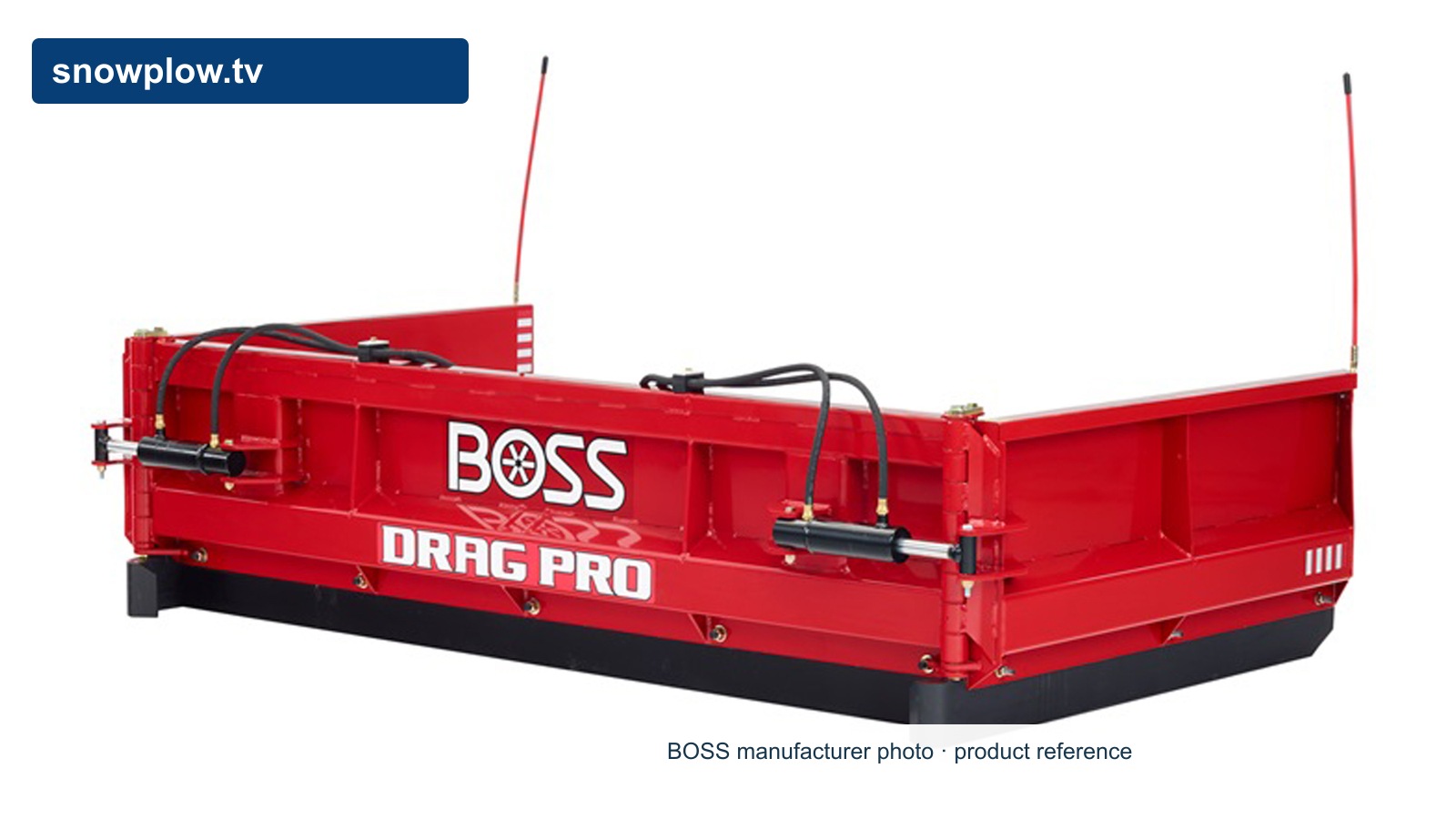
PlowWow announced on November 11 that a BOSS DRAG PRO 8–16 Hydraulic Folding Wing rear plow, RPL21616, was scheduled to go onto one of its trucks that day. The operator is seeking large commercial parking lots and strip malls across its Vancouver, Lower Mainland and Fraser Valley service area. This is PlowWow’s fleet news; an announcement of installation plans is not a completed-installation report or a field test.
Start with the pull, then plan the destination
A rear-pull snow plow changes how an operator approaches a pickup area. BOSS describes positioning the truck, lowering the rear blade and moving forward to draw snow out. The practical planning question is where that collected snow goes next. On a Metro Vancouver retail lot, a loading-bay apron, a parking aisle and the final storage area can be three separate work zones.
Our route-planning approach is to mark those zones before assigning passes. Identify the pickup point, the clear travel path and the handoff to the equipment that finishes moving or stacking the snow. Keep the pedestrian route outside that equipment sequence. A rear blade gathering snow does not complete a whole commercial property’s winter service.
Eight to sixteen feet: match the wings to the available space
The exact-model BOSS listing identifies an eight-to-sixteen-foot rear plow. Hydraulic folding wings provide a variable configuration; sixteen feet is the maximum listed width, not the usable clearance beside every parked car or island. This article concerns RPL21616, rather than the separate DRAG PRO 180Z or a front-mounted DXT.
Walk the lot with its normal parked vehicles and delivery activity in mind. Mark where a wide pass can continue unobstructed, where the working width must narrow and where the truck needs room to turn. Measure access and discuss operating clearance with the provider; blade width alone cannot answer whether the complete truck-and-plow combination fits.
Connect storefront edges, aisles and open pavement
Divide the route into useful sections: building-side pickup areas first, parking aisles next and open-pavement collection areas linked to agreed snow storage. This is an editorial planning sequence to discuss with the operator, not a substitute for the equipment manual or a universal dispatch order. Delivery windows and pedestrian activity can change the sequence.
For a retail plaza, record the doors that must stay usable, any overhead restrictions at loading access, islands and drain locations. Keep snow piles away from sightlines and the accessible route. Use the same marked plan for the operator and property contact so a last-minute vehicle or delivery change has a clear place to be recorded.
What the efficiency claim can tell you
BOSS attributes the rear-plow benefit to wider collection passes and adjustable wings in parking aisles. Its intended-use guidance also cautions against frozen snowbanks and frozen snow, and calls attention to snow weight and equipment strain. These are manufacturer statements, not measured results from PlowWow’s new setup.
Neither a sixteen-foot blade nor the lot’s square footage establishes an average completion time. Parked cars, turning, snow conditions, collection distance and the finishing work all matter. No verified before-and-after timing for this PlowWow addition is available here. Ask for a site-specific equipment plan and an agreed service scope, rather than converting blade width into a promised percentage saving.
Put the route plan beside the service request
Send PlowWow the address, approximate paved clearing area, access photographs, overnight parking pattern, opening and delivery times, and proposed snow-storage areas. Ask which equipment will handle the open lot and which work requires separate tools or visits. Truck suitability, mounting and operating procedures must follow the applicable BOSS and vehicle instructions.
Read PlowWow’s original fleet announcement and request an assessment. “Are you ready for Plow Wow?” is the operator’s invitation; availability and the final scope are confirmed directly with PlowWow.
Continue planning: site access checklist · commercial parking-lot plowing.
Sources
- PlowWow fleet announcement, November 11, 2026 — operator-supplied business news.
- BOSS RPL21616 product page — exact-model identity and configuration.
- BOSS rear-plow intended uses — attributed manufacturer applications and limits.
- BOSS MSC22983 Rev B owner’s manual — applicable model/serial range and operating guidance.
Sources checked November 11, 2026. Site-planning suggestions are editorial explanation, not measured fleet results.